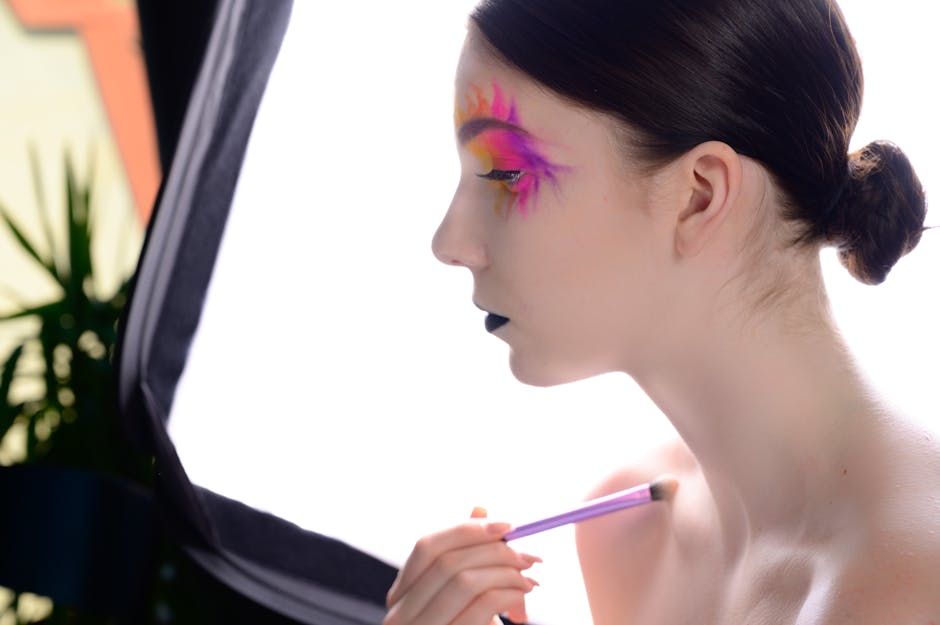
The assumption most people carry into a makeup tutorial: watch the steps, replicate the look. That’s what the format implies. It sounds logical. It mostly doesn’t hold up that way.
A makeup tutorial is closer to a demonstration of what works on one specific face, with one specific set of products, filmed under controlled lighting, by someone who has rehearsed that exact look many times before pressing record. That distinction changes how you should watch them — and what you can realistically take away.
What a Makeup Tutorial Actually Is
The technical definition: a step-by-step guide, video or written, showing how to apply cosmetic products to achieve a specific look or practice a specific technique. Simple enough on paper.
The practical reality is more layered. Tutorials exist on a spectrum from purely instructional — here’s how eyeshadow blending works mechanically, here’s why you prime before foundation — to purely aspirational — here’s my exact morning routine featuring products I was gifted. The most educational tutorials sit in the middle. They explain the why behind each step, not just the what.
The confusion is that most popular tutorials are actually product demonstrations dressed as technique guides. An influencer walking you through their foundation routine using Charlotte Tilbury Airbrush Flawless Foundation ($49) is showing you what that product looks like on their face. That is not the same as teaching foundation application as a transferable skill. Those are genuinely different things, and conflating them sets up most beginners for frustration.
That distinction matters because it changes what you’re watching for. If you treat every tutorial as a technique lesson, you’ll leave disappointed when the result doesn’t transfer. If you treat it as a demonstration — this is what this person does with these specific products — you’ll extract the useful parts and adapt the rest to your own face and kit.
Technique tutorials vs. look tutorials
Technique tutorials isolate one skill: how to apply eyeliner without it migrating, how to blend eyeshadow without turning it muddy, how to contour without visible stripes. Because they isolate the variable and explain the principle, they transfer across different faces and product combinations. The underlying logic holds even when you swap products.
Look tutorials walk you through recreating a specific finished result. Useful for inspiration. Less useful for building transferable skill. The blending approach that works for someone with a prominent brow bone and fully visible lid won’t behave the same on a hooded eye. The thumbnail tells you nothing about whether the route to that result works on your face.
Written tutorials vs. video tutorials
Written tutorials force specificity. Without footage to fall back on, a writer has to describe application speed, pressure, tool type, and product quantity in actual words. That precision often produces clearer instructions than video does. Video tutorials show application dynamics — wrist angle during blending, how quickly product is pressed into skin — that can’t be described in text. But video also hides vagueness behind confidence. Tight editing and good lighting make complicated processes look effortless in ways that are difficult to reproduce when you’re learning.
Tutorial Formats Compared by What They Actually Deliver
Not every tutorial format teaches the same things. Here’s an honest breakdown:
| Format | Best For | Core Value | Limitation |
|---|---|---|---|
| Narrated technique tutorial | Beginners | Explains reasoning behind product choice and application order | May not translate directly to your features or budget |
| Silent step-by-step video | Intermediate learners | Visual pacing, layering sequence, tool handling | No explanation of why steps happen in that order |
| Get-ready-with-me (GRWM) | Product discovery, inspiration | Seeing how products behave in a real routine | Often skips steps; technique is secondary to personality |
| Professional MUA tutorial | Advanced learners | Industry language, corrective techniques, precision work | May use professional tools not available retail |
| Before-and-after transformation | Seeing what’s possible | Understanding the full range of what cosmetics can do | Editing frequently distorts realistic expectations |
| Skincare-first base tutorial | Anyone with texture or longevity problems | How skin prep affects makeup behavior and wear time | Often sponsored; product choices are not neutral |
The get-ready-with-me format dominates TikTok and YouTube because it’s entertaining, not because it teaches efficiently. If building actual skill is the goal, narrated technique content — creators like Wayne Goss or Lisa Eldridge, who come from professional artistry backgrounds — covers the underlying mechanics that don’t change regardless of which products you happen to own.
Why Watching More Tutorials Doesn’t Always Make You Better
Passive watching builds almost no transferable skill. Following along in real time, on your own face, with your own products — that builds muscle memory. Most people watch tutorials the same way they watch television. That’s why someone can consume fifty blending tutorials and still not know how to blend. The gap is practice, not information volume.
How to Actually Extract Skill From Any Tutorial
Apply these specific steps and you’ll get more from a single good video than from a month of passive watching.
- Watch the entire tutorial once before touching your products. Understand the sequence end to end. Note every product and every tool used. Write down the ones you don’t own so you can identify substitutes before you start — not halfway through.
- Identify the two or three steps where the biggest visual transformation happens. That’s where the technique lives. Everything else is setup or polish. Focus your attention on those moments specifically.
- Understand how your products differ from theirs before applying the technique. If the tutorial uses NARS Soft Matte Complete Foundation ($57) and you have L’Oreal True Match ($13) at home, the finish and coverage weight differ. The application technique may need adjustment. Knowing the product differences ahead of time prevents a lot of unnecessary frustration.
- Pause the video at each step. Execute it yourself. Then resume. Don’t try to keep up in real time. Rushing is the primary reason beginner results diverge from tutorials — steps get compressed or skipped because the video kept moving.
- Rewatch only the steps where your result diverged. This is diagnostic, not remedial. You’re identifying what was different — application pressure, product quantity, tool type — not just what looked wrong.
- Repeat the same look three times across separate sessions. The first attempt is almost always rough. The second is noticeably better. By the third, the sequence is internalized. Attempting something once and concluding the technique doesn’t work for you is too early to judge.
Creators like Anastasia Beverly Hills often show real-time adjustments during brow tutorials — correcting placement, cleaning edges, filling asymmetrical gaps. Those correction moments teach more than a flawless demo would, because they reveal the decision-making process behind the technique, not just the finished result.
Three Things No Tutorial Can Teach You
How your face responds to specific products
Fenty Beauty Pro Filt’r Soft Matte Foundation ($40) oxidizes differently on oily skin than on dry skin. It sits differently over enlarged pores than over smooth skin. It looks different under different undertones. The creator’s result is the result on their face, in their climate, at their oil production level. No tutorial accounts for your face’s specific environment. The only way to know how a product behaves on your skin is to test it — ideally before you commit to a full look that depends on it behaving a certain way.
Application pressure and physical technique
How firmly you press a brush into skin, how fast you move it, how you hold the handle — all of these change results significantly. Two people following the same blending tutorial will blend differently because they have different default hand pressure. Video cannot transmit the tactile component of application. This corrects only through physical practice, not through additional watching.
Which steps can be shortened without ruining the result
A fifteen-step tutorial that takes the creator twenty-five minutes might take you an hour when you’re learning. Knowing which steps are load-bearing — skip them and the look collapses — versus which are optional polish requires multiple attempts to figure out. No tutorial addresses this because creators don’t know your time constraints or current skill level. You have to map this yourself through repetition.
What Tutorials Cover Well — and What They Consistently Skip
Where tutorial content is actually strong
Eye looks — cut creases, smoky eyes, graphic liner — film well. High contrast, visible transformation, dramatic before-and-after results. This is why eye content saturates tutorial platforms. The technique is also genuinely universal enough to transfer across different eye shapes when the creator explains the adjustments needed.
Contouring is well-covered in volume, though usually filmed under studio lighting that makes definition look sharper than it would in natural daylight. MAC Studio Fix Sculpt and Shape ($36) on camera looks different than the same product at a lunch table by a window. Most tutorials don’t address that gap, so beginners often over-apply trying to match the filmed result in real life.
Where tutorials consistently fall short
Skin prep is almost always rushed. Primer applied in eight seconds tells you nothing about why primer matters, which formulas work for which skin types, how long to wait after skincare before applying foundation, or what happens if you skip this step in humidity. Skin prep is the most skipped tutorial topic because it doesn’t film dramatically — and it’s also the step that affects how every product applied afterward behaves.
Color theory is almost never taught explicitly in popular tutorial formats. Understanding why a foundation pulls ashy on certain undertones, why a peach concealer corrects blue-toned undereye circles, why warm-toned highlight looks muddy on some complexions — these are the conceptual tools that make everything else actually work. They require explanation that doesn’t fit fast-paced video formats, so they get skipped. This is why many people can follow a tutorial perfectly and still produce a result that looks slightly off without understanding why.
What Makeup Tutorials Are Genuinely Good For
A makeup tutorial is a starting point. Not a blueprint, not a guarantee, not a substitute for practice time on your own face. The best ones give you enough information to begin experimenting intelligently — a sequence to try, a technique to test, a product category to consider. They don’t give you a formula that works universally across all faces and conditions.
If you’re deciding whether a tutorial is worth your time before committing to it, look for three markers: the creator explains why each step matters rather than just narrating what they’re doing; they name products specifically enough that you can find equivalents at your own price point; and they show or acknowledge an imperfect moment — an adjustment, a correction, something that didn’t go exactly right. Those three things separate a teaching tutorial from a polished performance.
The most skilled makeup wearers don’t replicate tutorials. They absorb techniques and adapt them to their own face, products, and constraints. That’s the actual goal — not matching the thumbnail, but understanding the reasoning behind each step well enough to improvise when your conditions don’t match the creator’s. When you get there, the tutorial format stops being a recipe and starts being a reference.