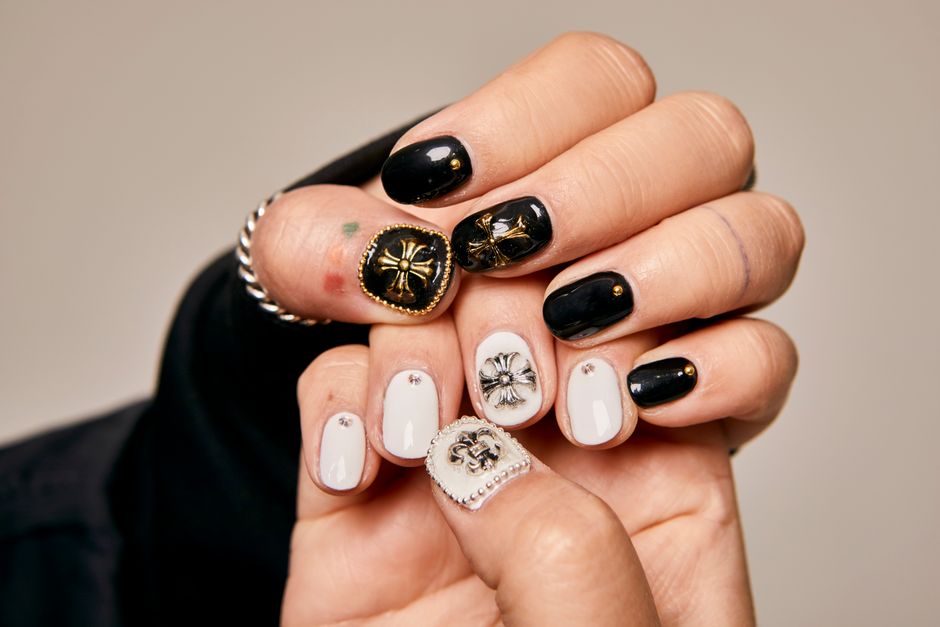
Blue is the most versatile color in nail art — if you pick the right shade. A royal blue that looks electric on one hand can wash out another completely. The difference comes down to undertone matching, finish choice, and design scale. Here are five blue nail art designs, each with a specific polish recommendation and a clear verdict on who should wear it.
Why Most Blue Nail Art Fails (And How To Fix It)
The most common mistake is treating blue as one color. It isn’t. Navy, cobalt, baby blue, and teal sit on different parts of the spectrum and interact with skin tone differently.
Cool undertones (pink or blue veins) look best with icy blues, periwinkles, and deep navy. Warm undertones (green or olive veins) need teal, turquoise, or cornflower blue. Neutral undertones can wear almost anything, but muted slate blues tend to look the most polished.
The second mistake is using a glossy finish on a matte skin undertone. High-shine blue can feel greasy on warm skin. Matte blue can look chalky on cool skin. Matching finish to skin texture matters as much as color.
Third mistake: overloading the design. Blue is already a statement. Adding glitter, foil, and multiple accent nails in one look creates visual noise. Stick to one focal technique per hand.
Design 1: Navy Negative Space With Gold Foil

This design uses a sheer nude base with a deep navy crescent at the cuticle. A thin strip of gold foil sits between the nude and the blue. The effect is clean, expensive, and elongates the nail bed.
Best polish for this: Essie’s ‘After School Boy Blazer’ (deep navy creme, $9.50) layered over a single coat of Essie’s ‘Mademoiselle’ (sheer pink). Gold foil flakes from Born Pretty cost around $4 for a pack of 12 sheets.
Who this works for: Warm and neutral skin tones. The warm gold bridges the cool navy, preventing the look from feeling harsh. Avoid if your nails are shorter than the tip of your finger — the negative space needs length to read as intentional.
Application tip: Use a thin liner brush to paint the navy crescent. Don’t freehand the gold foil — place it with tweezers while the blue is still tacky. Seal with a matte top coat for a modern finish.
Design 2: Cobalt Ombré With Silver Micro-Glitter
An ombré that fades from cobalt at the cuticle to a sheer silver at the tip. The transition hides regrowth and makes the hand look longer. This is the closest blue nail art gets to a power suit — confident, direct, and hard to ignore.
Best polish for this: OPI’s ‘Can’t Find My Czechbook’ (bright cobalt creme, $12) paired with OPI’s ‘Glitter Off The Press’ (silver micro-glitter, $12). Use a makeup sponge to dab the transition line in three thin layers.
Who this works for: Cool and neutral skin tones. The pure blue base has no yellow or green, so warm skin can look sallow next to it. If you have warm undertones but love cobalt, add a warm-toned silver (champagne glitter, not white silver) to the ombré shift.
Failure mode to watch for: Over-sponging. Two passes maximum. More than that and the sponge absorbs too much polish, creating a muddy gradient instead of a clean fade.
Design 3: Matte Baby Blue With Dotted White Accents

A single coat of matte baby blue on all nails. One accent nail per hand gets three white dots in a vertical line — like a minimalist abstract pattern. The rest stay solid. This is the quietest design in the list and the hardest to execute well.
Best polish for this: CND Shellac in ‘Baby Blue’ (gel formula, $15 per bottle) or Zoya’s ‘Brittney’ (matte finish, $10). For the dots, use a dotting tool (any brand, $3 on Amazon) and white gel polish — regular white polish won’t hold the dot shape on matte.
Who this works for: Neutral and cool skin tones with fair to medium skin. Baby blue is a low-contrast color. On dark skin, it can look chalky unless you add a high-shine top coat to create visual separation.
Tradeoff to consider: Matte finishes show every ridge and bubble. If your nail surface isn’t perfectly smooth, use a ridge-filling base coat (Sally Hansen’s ‘Hard As Nails’ works well, $5) before the color. Otherwise the matte texture magnifies imperfections.
Design 4: Teal Marble With White Veining
This design mimics natural stone. Start with a teal base (two coats), then drag thin white lines across the nail with a striping brush. Before the white dries, spritz 70% isopropyl alcohol on the nail. The alcohol spreads the white into organic, vein-like patterns. No two nails look the same.
Best polish for this: Sally Hansen’s ‘Teal The Cows Come Home’ (teal creme, $5) and any white gel polish for the veining. The alcohol technique works best with gel polish — regular polish dries too fast for the alcohol to spread the pigment.
Who this works for: Warm and neutral skin tones. Teal has yellow undertones, so it harmonizes with warm skin naturally. Cool skin can wear this too, but choose a teal that leans more green than blue.
Practical note: This design takes 25–35 minutes per hand. Not a quick manicure. Practice on a silicone mat first to get the alcohol-to-white ratio right. Too much alcohol and the pattern disappears. Too little and the veins stay thick and unnatural.
Design 5: Royal Blue With Thin Chrome Stripes
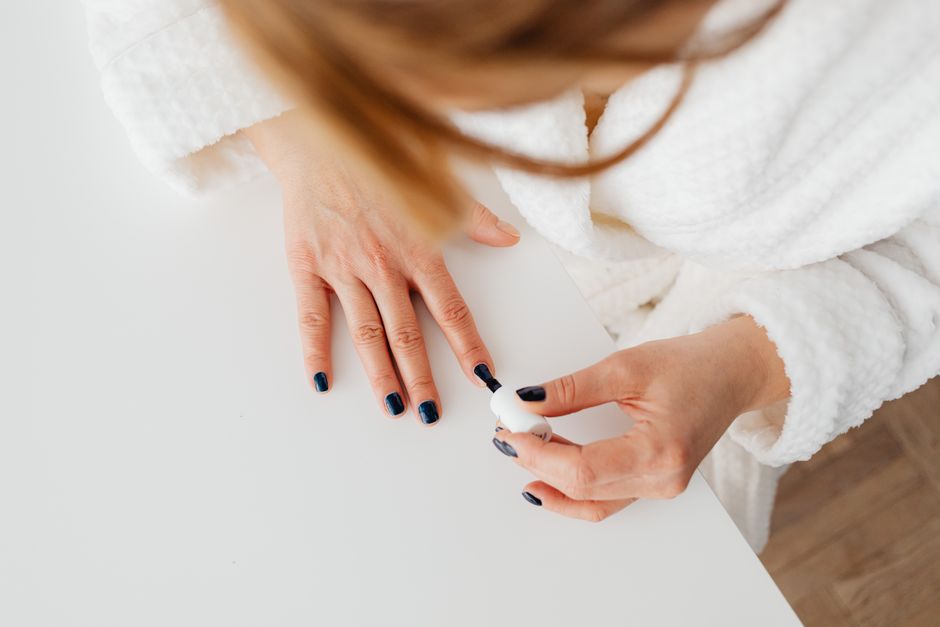
A royal blue creme base with three horizontal chrome stripes near the tip. The stripes are thin — about 1mm wide — and spaced 2mm apart. Chrome reflects light differently than glitter, giving the nail a metallic sheen that shifts as you move your hand.
Best polish for this: OPI’s ‘Dutch Ya Just Love OPI?’ (royal blue, $12) with a chrome powder like ‘Mermaid Chrome’ from Born Pretty ($6). Apply the chrome powder with a sponge applicator over a no-wipe gel top coat.
Who this works for: All skin tones. Royal blue sits in the middle of the blue spectrum — not too cool, not too warm. The chrome stripe adds brightness without competing with skin undertone. This is the most universally flattering design in the list.
When NOT to wear this: If your nail surface is heavily ridged or peeling. Chrome powder adheres to every texture, so imperfections show clearly. Wait until nails are smooth, or use two coats of ridge filler before the base color.
Quick Reference: Blue Shade By Skin Tone
| Skin Tone | Undertone | Best Blue Shades | Shades To Avoid |
|---|---|---|---|
| Fair | Cool | Icy blue, periwinkle, baby blue | Teal, turquoise |
| Fair | Warm | Cornflower, dusty blue, slate | Cobalt, royal blue |
| Medium | Neutral | Navy, royal blue, teal | Baby blue, electric blue |
| Medium | Warm | Teal, turquoise, aqua | Navy, periwinkle |
| Dark | Cool | Deep navy, cobalt, royal blue | Baby blue, sky blue |
| Dark | Warm | Teal, peacock blue, midnight blue | Periwinkle, icy blue |
The table above is a starting point, not a rule. Skin undertone is more important than skin depth. A fair-skinned person with warm undertones will look better in dusty blue than a dark-skinned person with cool undertones in the same shade. Test a stripe on your nail before committing to a full manicure.
Blue Nail Art Is About Precision, Not Volume
The five designs here share one thing in common: they use blue as the anchor, not the whole story. Negative space, chrome accents, marble patterns, and ombré transitions all let the color breathe. That restraint is what separates a good manicure from a great one.
Blue nail art isn’t going anywhere. The trend cycles through finishes — matte, glossy, chrome, glitter — but the core principle stays the same: match the shade to your undertone, keep the design focused, and let the color do the work. Nail art that follows those rules doesn’t need a seasonal update. It works year-round.