
You open your phone, tap the shopping app, and within 30 seconds you’re staring at 47 different vitamin C serums. All promise brighter skin. All have five-star reviews. You close the app and buy nothing. This isn’t laziness — it’s decision paralysis, and it’s costing you time and money.
Here’s what actually works to break the cycle.
Why More Choice Makes You Buy Worse Products
In 2000, a study by psychologists Sheena Iyengar and Mark Lepper ran a simple experiment at a grocery store. Shoppers faced a display of either 6 or 24 different jams. The bigger display attracted more attention, but shoppers who saw 24 jams were 10 times less likely to buy any jam at all. The ones who did buy reported lower satisfaction with their choice.
Beauty e-commerce has turned this up to eleven. A single search for “moisturizer for dry skin” on Sephora returns over 300 results. On Amazon, it’s closer to 2,000. Your brain wasn’t built to process that many options. It responds by either freezing (you buy nothing) or grabbing the first familiar brand (you buy something mediocre).
The real cost of hesitation
Every minute you spend scrolling product pages is a minute you could spend doing something that actually improves your skin — like applying SPF or drinking water. The average beauty shopper spends 14 minutes per purchase decision. That’s 14 minutes of mental energy that could be saved with a better system.
What happens when you buy impulsively
The opposite of paralysis is the impulse buy. You see a TikTok video, click the link, and buy a $38 cleanser that turns out to be too stripping for your skin. Now you’re out $38 and have a bottle that sits in your bathroom cabinet for six months before you throw it away. Impulse buying has a 60% return rate in beauty, but most products can’t be returned after opening. You’re stuck with the loss.
A 3-Step System to Cut Through the Noise
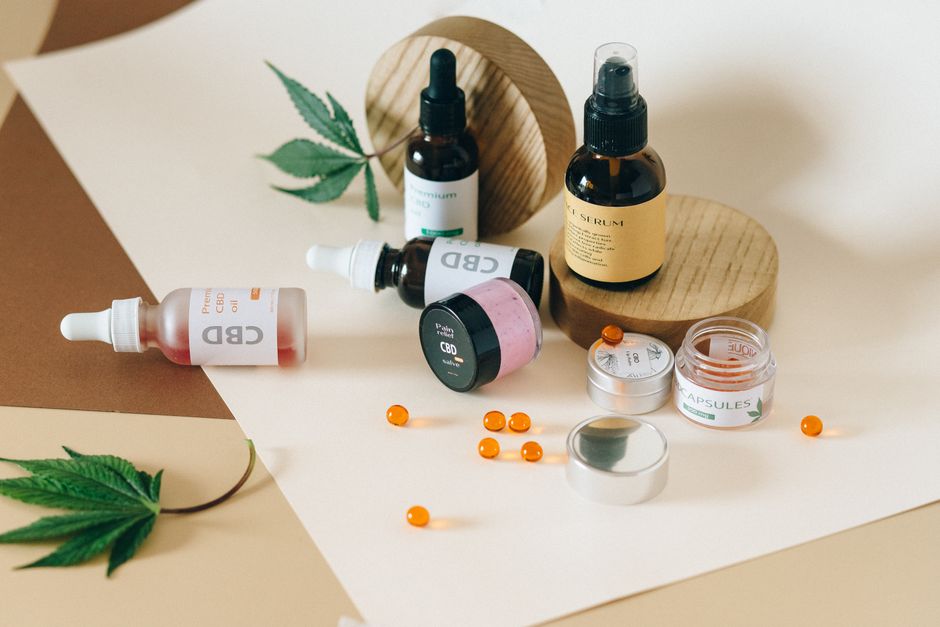
Stop treating beauty shopping like browsing a museum. Treat it like a grocery run — you know what you need, you grab it, you leave. Here’s the exact system.
Step 1: Define your skin’s non-negotiables
Before you open any app, write down three things: your skin type (oily, dry, combination, sensitive), your primary concern (acne, hyperpigmentation, aging, dehydration), and your budget cap per product. That’s it. If a product doesn’t match all three, it’s not an option.
For example: “Dry skin, hyperpigmentation, max $30 per product.” This immediately eliminates 80% of the market. You’re not looking at $68 serums. You’re not looking at mattifying gels. You’re looking at hydrating brightening products under $30. That’s a manageable list.
Step 2: Use the 3-review rule
Don’t read every review. Read exactly three: the most helpful positive review, the most helpful negative review, and the most recent review. The positive tells you what the product does best. The negative tells you its biggest flaw. The recent tells you if the formula changed recently. If the negative review mentions a dealbreaker for your skin type (like “caused breakouts” for acne-prone skin), move on.
Step 3: Buy from a store with a solid return policy
This is where the affiliate context matters. Retailers like Ulta and Nordstrom accept returns on opened beauty products within 30-60 days. Sephora has a similar policy for Beauty Insiders. Amazon’s policy is stricter — many beauty items are final sale. If you’re unsure about a product, buy from somewhere that lets you change your mind. This one habit can save you hundreds per year.
| Store | Return Window | Opened Products Accepted? | Best For |
|---|---|---|---|
| Ulta | 60 days | Yes | Drugstore + prestige mix |
| Sephora | 30 days (60 for Rouge) | Yes | High-end brands |
| Nordstrom | Unlimited | Yes | Luxury beauty |
| Amazon | 30 days | No (most items) | Known favorites only |
Common Mistakes That Waste Your Money
Most people make the same three mistakes when shopping for beauty products online. Avoid these and you’ll immediately buy better.
Mistake 1: Trusting the average star rating
A 4.5-star average is meaningless. A product with 10,000 reviews and a 4.5 average is usually fine. A product with 50 reviews and a 4.5 average could be friends and family. Look at the number of reviews, not just the stars. Products with 500+ reviews are statistically more reliable than those with fewer than 100.
Mistake 2: Ignoring the ingredient list for the marketing claims
“Brightening” doesn’t mean it contains vitamin C. “Hydrating” doesn’t mean it contains hyaluronic acid. Brands can use these words based on a single ingredient that’s present in trace amounts. Learn to read the first five ingredients on the label — those make up 80% of the formula. If the first ingredient is water and the second is alcohol, it’s not a hydrating product no matter what the bottle says.
Mistake 3: Buying the full size before trying a sample
This is the easiest fix. Before you commit to a $50 moisturizer, find a sample size or travel size. Many brands offer mini versions for $8-$15. That’s $8 to test whether a product works for you instead of $50 to find out it doesn’t. Sample sizes are the single best value in beauty e-commerce because they eliminate the risk of a full-size failure.
When You Should NOT Buy a Beauty Product Online

Some products are better bought in person. Fragrance is the obvious one — your nose can’t smell through a screen. But there are others.
Foundation and concealer
Shade matching is notoriously bad online. Even with AI tools like Sephora’s Color IQ, the match rate is around 60%. If you can, go to a store, test three shades on your jawline, walk outside, and check the match in natural light. If you must buy online, buy from a store that accepts returns on opened makeup — and buy only one shade at a time.
Products with active ingredients you haven’t used before
Retinol, vitamin C, AHAs, and BHAs can cause purging, irritation, or allergic reactions. Starting with a full-size bottle is risky. Start with a sample or a lower-concentration version. The COSRX AHA 7 Whitehead Power Liquid ($20) is a good starting point for chemical exfoliation because it’s gentle enough for most skin types. Jumping straight to a 10% glycolic acid serum is asking for trouble.
Products with short shelf lives
Some beauty products, especially those with clean or natural formulations, expire quickly. Look for the PAO (Period After Opening) symbol on the packaging. A product with a 6-month PAO means you need to use it up fast. If you’re not sure you’ll finish it in time, don’t buy it.
The Best Alternatives to Buying Blind
If you’re still unsure, here are three strategies that work better than picking a random product.
Strategy 1: Use a subscription box to discover
Services like Ipsy or Birchbox send you sample-sized products every month. For $12-$15 per month, you get 5 products to test. Over three months, you’ll have tried 15 products. If you find one you love, you buy the full size. If you don’t, you’re out $45 instead of $150. Subscription boxes are the lowest-risk way to discover new beauty products because they force variety at a fixed cost.
Strategy 2: Follow one trusted reviewer, not ten
Find one person whose skin type matches yours and who reviews products honestly. Not someone who hypes everything. Someone who says “this broke me out” or “this didn’t do anything for two months.” Watch their videos or read their blog for 30 minutes. You’ll learn more about what works for your skin type than scrolling through 200 product pages.
Strategy 3: Buy from brands that offer ingredient transparency
Brands like The Ordinary, CeraVe, and La Roche-Posay publish their full ingredient lists and explain what each ingredient does. You don’t have to guess. You can compare products side by side and make an informed choice in under 5 minutes. That’s the goal — fast, informed, done.
How to Know a Product Is Actually Worth Buying
After using the system above, you’ll have a shortlist of 2-3 products. Here’s how to pick the winner.
Check the concentration of active ingredients. A vitamin C serum with 10% L-ascorbic acid is more effective than one with 2% ascorbyl glucoside, but also more irritating. Choose based on your experience level. For beginners, a 10% concentration is safe. For sensitive skin, start at 5%.
Check the packaging. Vitamin C degrades in light and air. If it comes in a clear glass bottle with a dropper, it’s going to oxidize faster than one in an airless pump or opaque tube. The same applies to retinol and benzoyl peroxide. Packaging isn’t just aesthetics — it’s preservation.
Check the return policy one last time. If the product doesn’t work, can you send it back? If yes, buy with confidence. If no, ask yourself if you’re willing to gamble $30-$50 on a product you’ve never touched.
That’s it. You now have a system that takes 10 minutes per purchase and eliminates the overwhelm. No more decision paralysis. No more impulse buys. Just products that actually work for your skin.