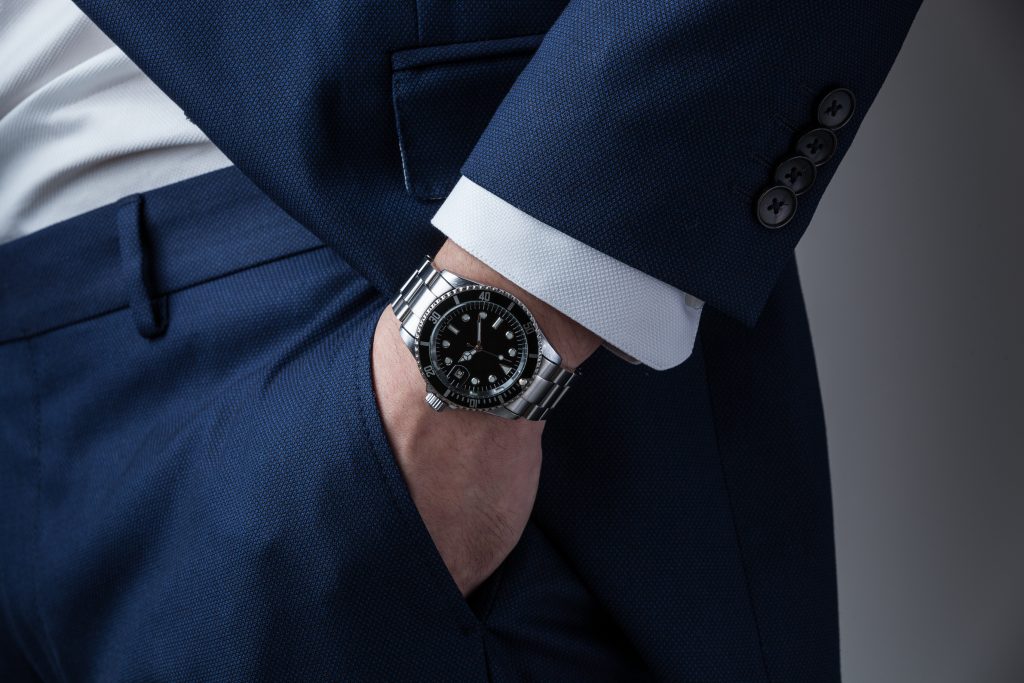
The Rolex Daytona retails for $14,550 at an authorized dealer. On Chrono24 right now, that same watch — reference 116500LN — lists for $30,000 to $48,000. That gap is not an anomaly. It is the Rolex market in its normal operating state, and walking in unprepared means you either leave empty-handed or overpay by tens of thousands of dollars.
First-time buyers almost always approach Rolex like a regular retail purchase. You find the model you want, find a store that carries it, and buy it. That sequence does not exist for most Rolex sports models. The market operates more like a restricted commodity than a retail product, with allocation driven by purchase history, dealer relationships, and supply chains that Rolex controls tightly.
This guide covers how the market actually works, which models are genuinely accessible, how to buy pre-owned without getting burned, and when Rolex simply is not the right choice for your situation.
The Waitlist Reality That Catches Every First-Time Buyer Off Guard
Walk into a Rolex authorized dealer and ask for a Submariner. You will almost certainly hear that none are available — not because the watch does not exist, but because Rolex allocates watches to dealers based on their sales history, and dealers prioritize established clients first. A first-time visitor has low priority by default.
Rolex produces approximately one million watches per year across all references. Global demand is significantly higher. That gap is structural and intentional — scarcity sustains brand equity. Understanding this is step one.
How Dealers Actually Decide Who Gets What
Each authorized dealer receives an allocation from Rolex that varies by reference. High-demand sports models — the Submariner (ref. 124060), the GMT-Master II Batman (ref. 126710BLNR), the Daytona (ref. 116500LN) — arrive in small numbers and go directly to existing client relationships. Dress models, including the Datejust 41 (ref. 126300) and the Oyster Perpetual, are allocated in larger quantities and appear in display cases more frequently.
Dealers vary significantly in how transparent they are about this process. Some maintain documented waitlists. Others operate entirely on relationship discretion. Ask any dealer directly how they handle allocation for waitlisted pieces. A vague or evasive answer is itself useful information about how that relationship will work.
The Buy-In Strategy and Whether It Works
Experienced buyers often recommend purchasing an available piece first — an Air-King (ref. 126900, $7,200 retail), an Explorer I (ref. 124270, $7,150 retail), or a Datejust — to establish purchase history and eventually unlock access to allocation pieces. Some buyers spend $7,000 to $8,000 specifically to get on the radar for a Daytona or Submariner allocation.
Whether that arithmetic works depends on your timeline and how specific you are about the reference you want. For someone who wants any Rolex, this approach is logical. For someone locked on a ceramic-bezel Daytona, the wait at retail could still be measured in years.
Rolex Model Prices: Retail vs. Gray Market in 2026
These figures reflect approximate 2026 MSRP at authorized dealers and current gray market trading ranges from platforms including Chrono24 and WatchBox. Gray market prices shift with demand cycles — treat these as directional benchmarks, not fixed quotes.
| Model | Reference | Retail MSRP | Gray Market Range | AD Availability |
|---|---|---|---|---|
| Submariner (no date) | 124060 | $9,100 | $13,500–$16,000 | Waitlist |
| Submariner Date | 126610LN | $10,450 | $15,000–$18,500 | Waitlist |
| GMT-Master II Batman | 126710BLNR | $12,900 | $18,000–$24,000 | Very limited |
| Daytona (ceramic bezel) | 116500LN | $14,550 | $28,000–$48,000 | Extremely rare |
| Datejust 41 | 126300 | $7,250 | $7,500–$9,000 | Often available |
| Air-King | 126900 | $7,200 | $7,800–$9,200 | Often available |
| Explorer I | 124270 | $7,150 | $9,500–$11,000 | Moderate waitlist |
The Datejust 41 is the most rational entry point for first-time buyers who want retail pricing. Minimal gray market premium, genuine availability at authorized dealers, and a versatile design that works across contexts. On pure accessibility and value, it is the clearest first Rolex for most buyers.
Authorized Dealer vs. Gray Market: Where Your Money Actually Goes
Buy from an authorized dealer at retail when you can. If you are paying a 50 percent gray market premium for a current-production Submariner, you are paying tens of thousands of dollars specifically for the privilege of not waiting.
The gray market is legal. Platforms like Chrono24, WatchBox, and Bob’s Watches operate legitimate resale operations with authentication processes. This is not a debate about legality. It is a debate about whether paying $15,000 for a $9,100 watch is financially rational for your situation.
What Gray Market Buyers Give Up
No Rolex manufacturer warranty. Rolex’s five-year warranty applies only to watches purchased through authorized dealers with a valid warranty card. A gray market watch — even brand new in box — carries zero Rolex warranty coverage from day one. Some gray market dealers offer their own 12 to 24 month guarantees, but those terms vary and those guarantees are not backed by Rolex’s service infrastructure.
Out-of-warranty servicing costs apply immediately. A full movement service at a Rolex service center runs $800 to $1,200 on a sports model. At ten-year intervals, that is manageable — but starting without manufacturer coverage means any factory defect in the first year is your out-of-pocket expense.
When the Gray Market Actually Makes Sense
Discontinued references. The Rolex Explorer II ref. 16570 with a Polar white dial, for example, is no longer manufactured — gray market and pre-owned are the only sources. Vintage references, limited production pieces, and watches from specific production years that collectors target all exist exclusively in secondary channels. For those purchases, Chrono24 is the right platform. For current-production models at 50 to 200 percent premiums above retail, the math rarely works in the buyer’s favor.
7 Checks to Spot a Fake Rolex Before You Pay
Counterfeit Rolex watches have improved dramatically over the past decade. These checks catch the large majority of fakes without specialized equipment — but for high-value private purchases, they are a floor, not a ceiling.
- Seconds hand sweep. Genuine Rolex calibers operate at 28,800 vph or higher, producing a near-continuous sweep. A ticking seconds hand that advances once per second is an immediate red flag on any modern Rolex.
- Cyclops magnification. The date magnification lens on genuine Datejust and Submariner Date models is 2.5x. Counterfeits show weak, blurry, or distorted magnification that does not clearly enlarge the date numeral.
- Crown logo at 6 o’clock. Under magnification, genuine Rolex dials show a precisely laser-etched crown. On counterfeits, this detail is blurry, inconsistently shaped, or missing entirely.
- Bracelet and clasp weight. Rolex uses an Oysterlock clasp in solid Oystersteel. Hold the watch — it should feel dense and substantial. Hollow or lightweight clasp construction is a consistent counterfeit signal.
- Engraved serial and reference numbers. Post-2005 Rolex watches have serial and model numbers engraved between the lugs at 6 and 12 o’clock respectively. These should be sharp, fine-lined, and readable only under magnification — not stamped or surface-printed.
- Rolex service center verification. For significant purchases, Rolex can confirm authenticity at their official service centers. The cost is modest relative to the purchase price.
- Authenticated resellers over private sales. WatchBox, Crown and Caliber, and Watchfinder and Co. employ trained authenticators as standard practice. Private sales on eBay or forum listings shift authentication risk entirely to you.
For any private purchase above $5,000, an independent watchmaker inspection runs $50 to $150 and significantly reduces your exposure. It is a small fraction of the transaction for meaningful protection.
Pre-Owned Rolex: The Strongest Value Case for Most First-Time Buyers
Pre-owned is where rational Rolex buyers often land. A pre-owned Submariner (ref. 124060) in excellent condition with box and papers typically sells for $11,000 to $13,500 through reputable dealers — less than a gray market new example, more than retail, but with no waitlist friction and immediate ownership. For buyers who want the watch rather than the retail transaction, the economics frequently favor this path.
The perception that pre-owned luxury watches are diminished has largely dissolved. Certified pre-owned programs from WatchBox, Watchfinder and Co. (owned by Richemont Group), and Bob’s Watches operate with authentication guarantees and limited warranties. WatchBox provides a two-year certified warranty and detailed condition photography for each listed watch. Watchfinder performs full service reconditioning before resale and issues a 12-month warranty on every piece. These are established businesses with return policies and authentication accountability — not hobbyist resellers.
The Documentation Hierarchy in Pre-Owned Purchases
The full set — original box, papers (warranty card), and service records — commands a 10 to 20 percent premium over the same watch without documentation. That premium is usually worth paying. Full documentation protects resale value substantially, simplifies insurance appraisal, and provides an ownership chain for higher-value references.
Watches with a Rolex Service Certificate are particularly attractive. This certificate documents that the movement was inspected and serviced by Rolex-certified technicians, that all replacement parts are genuine Rolex components, and that the watch has been pressure-tested and meets current Rolex performance specifications post-service. It adds meaningful confidence to any pre-owned purchase.
What Case Condition Actually Reveals
Rolex Oystersteel polishes well — sometimes too well. Excessive case polishing rounds the sharp beveled edges that define Rolex’s case geometry, reducing both aesthetic and collectible value. Listings described as unpolished or lightly brushed preserve the original shaping. High-gloss, uniformly polished cases suggest either heavy wear or an unauthorized polish. For buyers planning to hold long-term or resell, unpolished condition is worth paying more for — it signals that the watch was worn carefully, not refurbished to hide wear.
Best Pre-Owned Sources Ranked by Buyer Protection
WatchBox and Watchfinder and Co. sit at the top — two-year warranties, full authentication, and return policies. Bob’s Watches offers a buyback guarantee and strong Rolex-specific inventory depth. Crown and Caliber (now under Hodinkee) provides 30-day returns and authentication review. Private sellers via Reddit’s r/WatchExchange or Chrono24 private listings offer the lowest prices but shift all authentication responsibility to you. Budget the cost of a watchmaker inspection into any private purchase — it is not optional at this price point.
When You Should Skip Rolex and Buy Tudor Instead
If the Submariner’s design is what draws you — not the crown logo specifically — the Tudor Black Bay 58 ($3,725 retail, immediate availability at authorized dealers, same parent company as Rolex, movement architecture that shares Rolex DNA) delivers the core aesthetic at less than half the price with zero waitlist and no relationship-building required. Buy the Tudor. Wear it for a year. If Rolex remains the specific goal after that, the decision will be clearer and far easier to justify.
After You Buy: Insurance, Servicing, and What to Keep
Does a Rolex Need Its Own Insurance Policy?
Yes — for any watch above $5,000. Standard homeowners and renters insurance typically caps jewelry and watch coverage at $1,500 to $2,500 without a scheduled rider. A $10,000 Submariner requires a scheduled personal property endorsement or a standalone valuables policy to be meaningfully protected.
Specialized watch insurers handle these claims better than standard carriers. Hodinkee Insurance (underwritten by Markel), Jewelers Mutual, and Chubb Valuable Articles all offer policies covering theft, accidental damage, and mysterious disappearance. Premiums vary by state and by individual risk factors including storage location, claims history, and whether the watch is worn daily or stored. A practical benchmark: 1 to 2 percent of the watch’s appraised value annually. On a $10,000 piece, that is $100 to $200 per year. Get quotes from at least two providers before selecting coverage — rates can differ by 30 to 40 percent for the same watch. Chubb’s Valuable Articles policy consistently receives strong marks in claims-handling satisfaction among collector communities. Jewelers Mutual provides the broadest worldwide wear coverage for buyers who travel internationally with their watches.
How Often Does a Rolex Need Professional Servicing?
Rolex recommends a complete service every ten years under normal use. A full service at an official Rolex service center includes movement disassembly and inspection, replacement of worn components with genuine parts, gasket replacement for water resistance, and a post-service warranty on the work performed. Cost: $800 to $1,200 depending on the reference and condition. For in-warranty watches, stick with Rolex-authorized service — independent service during the warranty period can void coverage. After warranty expiration, qualified independent watchmakers charge $300 to $600 for comparable work and typically offer faster turnaround.
What Documentation to Keep and How to Store It
Preserve the original box, warranty card, all service receipts, and your original purchase documentation. Store these separately from the watch itself — if the watch is lost or stolen, documentation held elsewhere proves ownership and simplifies insurance claims processing. Photograph all paperwork and keep digital copies in cloud storage. A full-set Rolex with clean service history reliably commands 15 to 20 percent more at resale than the identical reference without documentation. The warranty card and box you are tempted to discard represent a real financial asset — store them accordingly, and your resale position will reflect it.