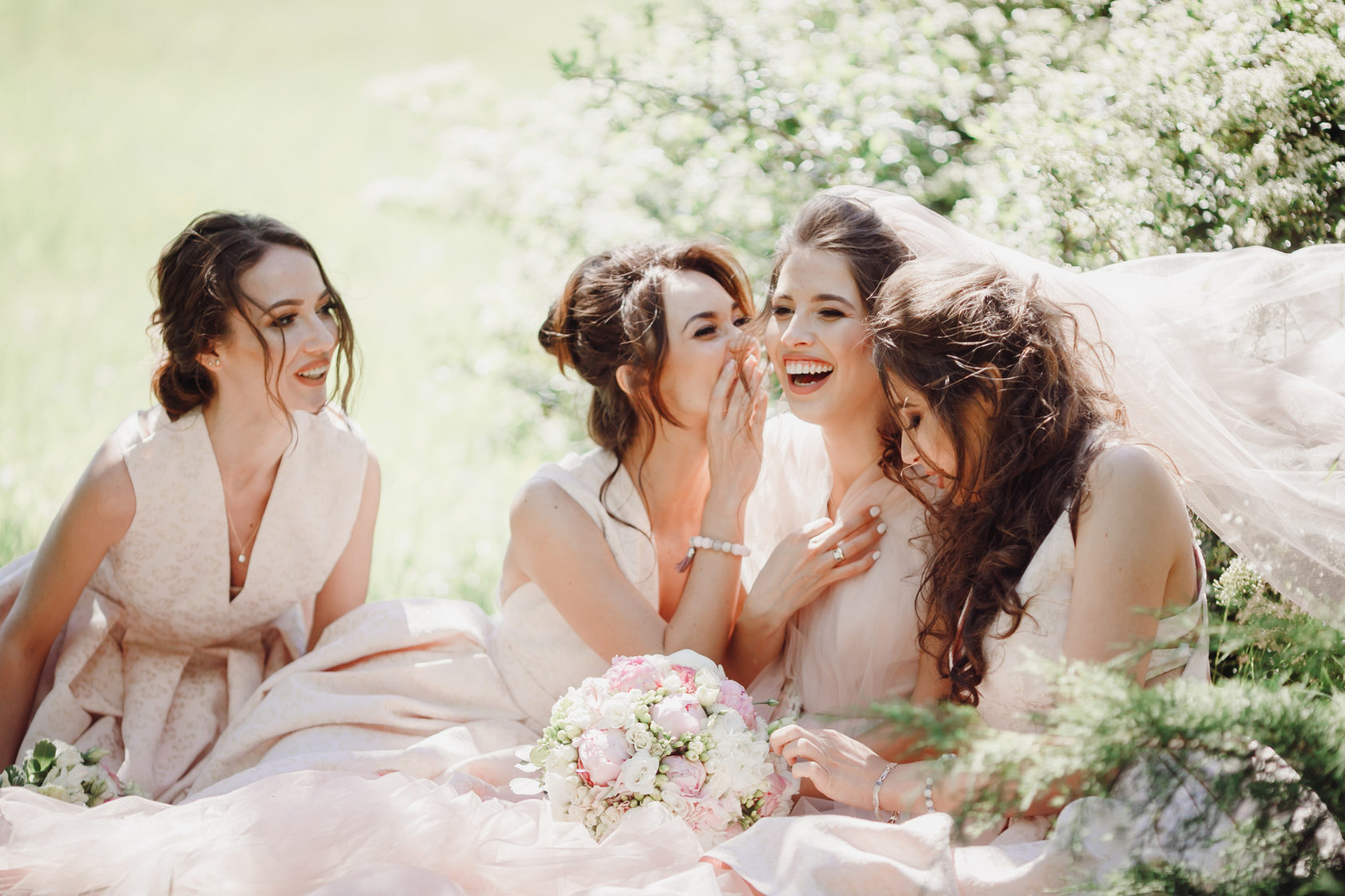
Most brides start with the color. Then they panic when one bridesmaid hates the neckline, another looks washed out, and the third can’t sit down in the fabric. The problem isn’t the dress. It’s the order you’re making decisions in.
Color is the last thing to lock in. The first is fit and fabric. These two factors determine whether your bridesmaids feel comfortable and look cohesive — or spend the whole day tugging at straps and avoiding the dance floor.
Here are the five rules that fix this. No fluff. No “every dress works for every body.” Just real logic that keeps everyone happy.
Rule 1: Fit Comes Before Color — Here’s Why
You’ve seen the photo. Four bridesmaids in the same dusty rose dress. One looks incredible. One looks okay. Two look like they’re wearing a borrowed costume. That’s what happens when fit is an afterthought.
Fit is the single biggest factor in how a dress reads in photos and in person. A dress that fits well makes any color look intentional. A dress that fits poorly makes even the perfect shade look wrong.
What “good fit” actually means for bridesmaid dresses
It’s not about size tags. It’s about three measurements: bust, waist, and hip. Most bridesmaid dresses from brands like David’s Bridal or Azazie use standard sizing charts that assume a 10-inch difference between bust and waist. Real bodies don’t work that way. A woman with a 34C bust and a 28-inch waist needs a different size than a woman with a 36B bust and a 32-inch waist, even if they wear the same dress size in street clothes.
Solution: Order sample sizes or use at-home try-on programs. Azazie offers a “Try at Home” program for $15 per dress. Birdy Grey sends full size runs for $10. Do this before you commit to a color or style. If the sample doesn’t fit, the final dress won’t either.
Alterations are not optional
Budget for them. A $150 dress with $60 in alterations looks better than a $400 dress off the rack. Plan for hemming (especially for heels), taking in the waist, and adjusting straps. Most bridesmaids need at least one of these three fixes.
Rule 2: Pick a Fabric That Can Breathe — Then Worry About the Look
This is where most guides get it wrong. They talk about “flowy” or “structured” without telling you what that actually means for a 6-hour wedding day. Fabric determines how the dress moves, how it photographs, and whether your bridesmaids sweat through it.
The three worst fabrics for bridesmaid dresses:
- Polyester satin. Shiny, cheap-looking in photos, and zero breathability. If a dress is 100% polyester satin, skip it. You’ll see sweat stains and static cling by the first dance.
- Acrylic knits. They pill after one wear and stretch out over the course of an evening. A dress that fits at 4 PM will sag by 9 PM.
- Stiff taffeta. Loud, unforgiving, and impossible to sit in for long periods. Avoid unless the wedding is under two hours.
The three best fabrics:
- Crepe (polyester or rayon blend). Drapes well, doesn’t wrinkle, and has a matte finish that photographs beautifully. Jenny Yoo makes excellent crepe bridesmaid dresses starting around $250.
- Chiffon over a lining. Lightweight, breathable, and forgiving. Watters and BHLDN both have chiffon options that work for outdoor summer weddings.
- Cotton-silk blends. Expensive but worth it for hot climates. Reformation bridesmaid dresses use this fabric and start at $280. They breathe like a good t-shirt.
How to test fabric before buying
Rub the fabric between your fingers. If it feels slick or plasticky, it’s cheap polyester. If it wrinkles instantly when you squeeze it, it will wrinkle in photos. If it smells like chemicals, the dye quality is low. Walk away.
Rule 3: One Silhouette Does Not Fit All — Use a “Family” Instead
The biggest mistake brides make is forcing one dress style on everyone. A strapless A-line works for a pear-shaped bridesmaid but not for one with a large bust. A high-neck sheath flatters a petite frame but suffocates a tall, broad-shouldered woman.
The fix: Pick a “family” of dresses instead of one exact style. Same color, same fabric, different silhouettes. This creates visual cohesion without forcing anyone into a cut that doesn’t work for their body.
How to build a dress family
Choose one or two consistent elements, then let the silhouette vary. Here are three working combinations:
| Consistent Element | Variable Silhouettes | Best For |
|---|---|---|
| Color + fabric (e.g., dusty blue crepe) | A-line, sheath, fit-and-flare | Brides who want identical color but different shapes |
| Neckline + length (e.g., V-neck, floor-length) | Satin crepe, chiffon, lace overlay | Formal weddings where neckline uniformity matters |
| Fabric + length (e.g., chiffon, midi) | Spaghetti strap, cap sleeve, off-shoulder | Outdoor weddings where fabric weight is critical |
Brands that do this well: Azazie offers 80+ styles in the same color and fabric. Show Me Your Mumu lets each bridesmaid pick from 6-8 silhouettes within a color palette. Revelry has a “mix and match” tool that shows how different styles look together before you buy.
Rule 4: Set a Budget That Doesn’t Cause Resentment
Bridesmaids spend an average of $1,600 on wedding participation, according to a 2026 Brides survey. The dress is the single biggest line item after travel. If you pick a $400 dress without asking, you’re asking for silent resentment.
Rule of thumb: The dress should cost less than one night’s stay at the wedding hotel. If the hotel is $250 a night, the dress should be under $250. If it’s a destination wedding, the dress should be under $150.
Where to find affordable options that don’t look cheap
- Birdy Grey. Dresses start at $99. Solid quality for the price. Limited color range but good for classic palettes.
- Lulus. Bridesmaid section has dresses from $60-$120. Read reviews carefully — some styles run small in the bust.
- ASOS Design. Bridesmaid collection from $70-$150. Good for trendy cuts and plus sizes up to US 22.
- Ever-Pretty. Dresses from $50-$100. Hit or miss on fabric quality, but excellent for budget-conscious bridesmaids who want a specific color.
The hidden costs most brides forget
Alterations ($40-$80). Shoes ($30-$80). Undergarments ($20-$50). If the dress needs special shapewear or a specific bra, factor that in. A dress with a built-in bust cup saves $30 on a strapless bra. A dress with adjustable straps saves $20 on strap shortening.
Verdict: For most weddings, Birdy Grey at $99 + $60 in alterations = $159 total. That’s the sweet spot for avoiding resentment while still getting a dress that fits well.
Rule 5: Test the Dress in Real Conditions — Not Just in Your Living Room
A dress that looks perfect on a hanger can fail in real wedding conditions. You need to test three things before you finalize any order.
Test 1: The sit test
Have the bridesmaid sit in the dress for five minutes. Can she cross her legs? Can she lean forward without the neckline gaping? Can she stand up without the dress riding up? If the answer to any of these is no, the dress needs alterations or a different silhouette.
Test 2: The dance test
Put on the wedding shoes. Do three spins. Raise both arms overhead. Bend down to pick something up. If the dress shifts, straps slip, or fabric pulls, it will do the same on the dance floor.
Test 3: The photo test
Take a photo in natural light, indoor light, and with flash. Some fabrics (especially polyester satin) look different in flash photography. Some colors (especially light pink and mint) wash out in bright sunlight. A dress that looks good under all three lighting conditions is a keeper.
When to skip this testing: If the dress is under $100 and the bridesmaid is fine with it being a one-time wear, testing is optional. But for anything over $150, do the tests. Returns are easier than regret.
When to Break These Rules
Rules exist for most weddings. But some situations call for exceptions.
Skip Rule 3 if the wedding is black-tie formal and you need strict uniformity. In that case, pick one dress and pay for alterations for everyone. Budget an extra $100 per person for this.
Skip Rule 1 if every bridesmaid has the same body type (rare, but happens with small wedding parties). Then you can pick one silhouette and focus on color and fabric.
Skip Rule 4 if you’re paying for the dresses yourself. Some brides do this for destination weddings or small parties. If you’re covering the cost, your budget is the only limit.
Skip Rule 5 if the bridesmaid lives in another city and can’t try on the dress before the wedding. In that case, order from a brand with a generous return policy (Azazie gives 10 days, Birdy Grey gives 14 days) and have a backup plan.
The exception proves the rule. Most brides need all five. Only break one if you have a specific, documented reason.
The single most important takeaway: Fit and fabric are the foundation — if you get those right, everything else falls into place.