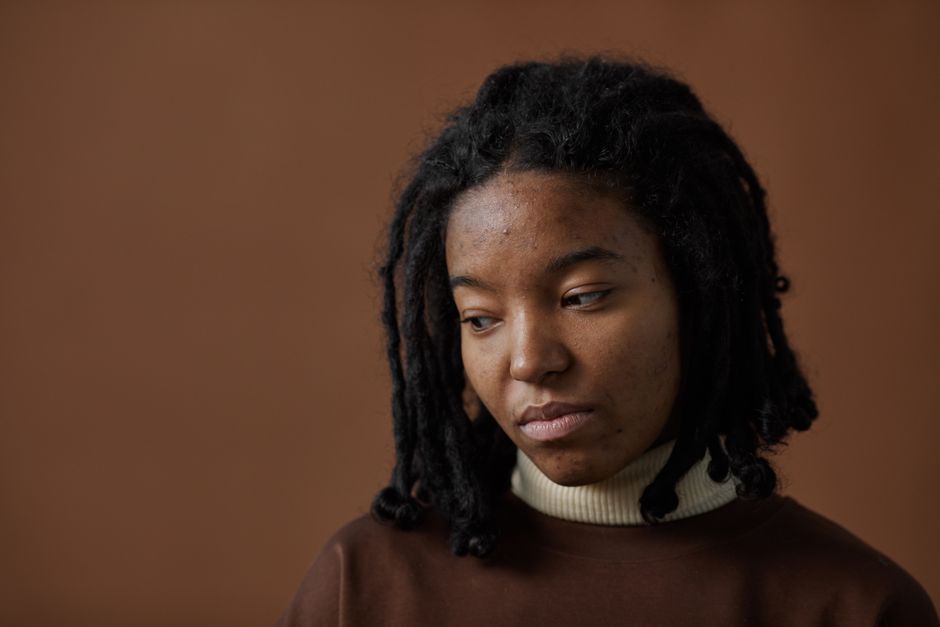
You wash your face twice a day. You change your pillowcase. And yet, every month like clockwork, three or four deep, angry bumps appear on your chin. Sound familiar?
That’s hormonal acne. It’s not caused by dirty skin or bad products. It’s driven by androgen hormones that ramp up oil production in the lower third of your face. Standard acne treatments often fail here because they don’t target the root cause. This guide gives you the exact routine — products, timing, and lifestyle shifts — to stop it.
Why Hormonal Acne Hits the Chin (And What Actually Causes It)
Your chin and jawline have more androgen receptors than other parts of your face. When estrogen drops before your period, testosterone’s relative influence rises. This triggers your sebaceous glands to pump out excess sebum. The pores clog. Bacteria multiply. You get a cyst.
It’s not just about your period either. Stress raises cortisol, which can mimic androgen activity. Birth control changes or coming off it can spike breakouts. Even certain protein powders — especially whey — can trigger hormonal shifts that show up on your chin.
Key thing to understand: this isn’t a hygiene problem. Scrubbing harder or using harsh alcohol toners will inflame it more. You need ingredients that regulate oil production and kill bacteria without stripping your barrier.
Common Triggers You Might Miss
- Dairy — some women see a clear link between milk/cheese intake and chin cysts. Try cutting it for 3 weeks.
- Whey protein — spikes insulin-like growth factor (IGF-1), which boosts sebum. Switch to plant-based protein.
- Skincare with coconut oil — highly comedogenic for most people. Check your moisturizer ingredients.
- Chin touching — resting your chin on your hand during work transfers bacteria directly into pores.
The Exact 3-Step Routine That Works (Morning and Night)

You don’t need twelve products. You need three that target the hormonal acne cascade. Here’s the routine that dermatologists actually recommend.
Step 1: Cleanse with Salicylic Acid (AM and PM)
Salicylic acid is oil-soluble. It penetrates deep into pores to dissolve the sebum plugs that form chin cysts. Use a 2% salicylic acid cleanser — leave it on for 60 seconds before rinsing.
Two solid options: CeraVe SA Cleanser ($14, 12 oz) has 2% salicylic acid plus ceramides to protect your barrier. La Roche-Posay Effaclar Medicated Gel Cleanser ($16, 6.8 oz) adds lipo-hydroxy acid for extra exfoliation. Both are fragrance-free and non-comedogenic.
Step 2: Treat with Benzoyl Peroxide (PM Only)
Benzoyl peroxide kills the bacteria that turn clogged pores into inflamed cysts. It’s the single most effective ingredient for hormonal chin acne — period. Use a 2.5% or 5% leave-on treatment. Higher percentages don’t work better, they just irritate more.
Paula’s Choice 2.5% Benzoyl Peroxide Treatment ($22, 2.5 oz) is the gold standard. It’s micronized so it spreads thin without bleaching your towels. Apply a pea-sized amount only to your chin and jawline after cleansing. Wait 2 minutes, then moisturize.
Step 3: Moisturize with Niacinamide (AM and PM)
Benzoyl peroxide and salicylic acid are drying. Niacinamide (vitamin B3) reduces oil production while repairing your moisture barrier. It also calms the redness around active breakouts.
The Ordinary Niacinamide 10% + Zinc 1% ($6, 1 oz) is cheap and effective. Or La Roche-Posay Effaclar Mat Moisturizer ($37, 1.35 oz) combines niacinamide with salicylic acid for daytime oil control. Apply after treatment, before sunscreen in the AM.
When to Add Prescription-Strength Options (And Which One)
If the 3-step routine isn’t clearing your chin after 8 weeks, it’s time to level up. Over-the-counter benzoyl peroxide and salicylic acid can only do so much. The next tier is retinoids and anti-androgen medications.
Adapalene (Differin Gel)
Adapalene 0.1% is now available over the counter as Differin Gel ($15, 0.5 oz). It’s a retinoid that normalizes skin cell turnover so pores don’t clog in the first place. It also reduces inflammation in existing cysts.
Start slow: apply a pea-sized amount every third night for two weeks, then every other night. Use it instead of benzoyl peroxide in your PM routine — not with it. Both together will destroy your skin barrier.
Spironolactone (Prescription Only)
Spironolactone is a diuretic that blocks androgen receptors in the skin. It’s the closest thing to a “cure” for hormonal acne. Women take 50-100mg daily, and most see 70-90% reduction in chin breakouts within 3 months. Side effects include dizziness and frequent urination. You need a dermatologist to prescribe it.
Birth Control Pills
Combination pills with estrogen (like Yaz or Ortho Tri-Cyclen) stabilize hormone fluctuations. They work well, but they take 3-6 months to show results. Not everyone can take them — smokers over 35 and those with migraine with aura are excluded.
Common Mistakes That Keep Your Chin Breaking Out
Here’s where most people go wrong. These mistakes sabotage even the best routine.
| Mistake | Why It Fails | What to Do Instead |
|---|---|---|
| Using too many actives at once | Destroys skin barrier, increases irritation and breakouts | Stick to one active per routine (BP at night, SA in the morning) |
| Spot-treating only | Doesn’t prevent new breakouts in surrounding pores | Apply treatment to entire chin and jawline, not just the bump |
| Skipping moisturizer | Dry skin overproduces oil to compensate | Always moisturize after treatment, even if your skin feels oily |
| Picking or popping cysts | Spreads bacteria deeper, causes scarring | Use a hydrocolloid patch (like Mighty Patch, $13 for 36) overnight |
| Not changing pillowcases | Bacteria and oil transfer back to your chin every night | Switch every 2-3 days. Use a fresh side each night |
When NOT to Buy a New Product
If your skin is red, stinging, or peeling, stop everything. You don’t need a new product. You need to repair your barrier. Use only a gentle cleanser (Vanicream Gentle Facial Cleanser, $9, 8 oz) and a barrier cream (La Roche-Posay Cicaplast Baume B5, $16, 1.35 oz) for 10-14 days. Then reintroduce actives one at a time.
Lifestyle Changes That Actually Move the Needle
Topicals can only do 60% of the work. The other 40% is what you eat and how you manage stress.
Diet Adjustments
High glycemic foods (white bread, sugary drinks, chips) spike insulin, which triggers androgen production. A 2026 study in the Journal of the American Academy of Dermatology found that a low-glycemic diet reduced acne lesions by 50% in 12 weeks. Swap white rice for quinoa. Replace soda with sparkling water. Eat more leafy greens and fatty fish.
Dairy is trickier. Not everyone reacts to it, but if your chin breakouts cluster around the time you eat cheese or drink milk, try a 3-week elimination. Use oat or almond milk instead. Oatly Barista Edition ($5.50 per half-gallon) froths well and doesn’t spike IGF-1.
Stress Management
Chronic stress raises cortisol, which directly increases sebum production. You don’t need a meditation retreat. Five minutes of box breathing (inhale 4 seconds, hold 4, exhale 4, hold 4) before bed lowers cortisol measurably. Or use an app like Calm ($70/year) for guided stress reduction. It’s not woo-woo — it’s biology.
Sleep Quality
Your skin repairs itself between 11 PM and 3 AM when cortisol is lowest. If you’re sleeping 5-6 hours, your body doesn’t have time to clear inflammation. Aim for 7-8 hours. Silk pillowcases ($25 each) reduce friction and absorb less product than cotton, so your chin treatments stay on your skin where they belong.
The single most important takeaway: hormonal chin acne requires a consistent routine of salicylic acid, benzoyl peroxide, and niacinamide, plus lifestyle changes to lower insulin and cortisol — and if that fails after 8 weeks, see a dermatologist for spironolactone or adapalene.