
You know the drill. You carefully apply your expensive face sunscreen, feel virtuous for exactly 12 minutes, then your eyes start watering. By 10 AM, you look like you’ve been pepper-sprayed. You wipe your eyes, rub off the SPF around them, and defeat the entire purpose.
The culprit isn’t “sensitive eyes.” It’s specific chemical filters migrating into your tear film. Fix the filters, fix the problem.
But there’s a second demand nobody talks about: texture. Most eye-safe sunscreens are greasy messes that never dry down. You need protection that doesn’t make you look like a glazed donut. This guide names the specific ingredients to avoid, and the lotions that solve both problems at once.
The Filters That Sting (And Why They Do It)
Eye stinging from sunscreen is not random sensitivity. It’s chemistry.
Four specific UV filters are small enough to penetrate the tear film and trigger a stinging reflex: Avobenzone, Octinoxate, Octocrylene, and Oxybenzone. These are the most common chemical filters in American sunscreens. They’re cheap, effective, and they burn like hell if they migrate even a millimeter.
Avobenzone is the worst offender. It degrades in light, so formulators add stabilizers that make it even more irritating. Octinoxate is slightly less aggressive but still notorious for eye migration.
Mineral filters—zinc oxide and titanium dioxide—don’t sting because the particles are too large to penetrate the tear film. They sit on top of skin. The tradeoff? They often leave a white cast and feel thick. But newer formulations have micronized these particles enough to reduce ghost-face without sacrificing the non-stinging benefit.
Some chemical filters also avoid the problem entirely. Uvinul A Plus, Tinosorb S, and Mexoryl SX are larger molecules designed to stay on the skin surface. You’ll find these in Korean and European formulations, not in most American drugstore bottles.
| Filter | Type | Eye Sting Risk | Found In |
|---|---|---|---|
| Avobenzone | Chemical | High | US sunscreens |
| Octinoxate | Chemical | High | US, some Asian |
| Octocrylene | Chemical | Moderate | US, some EU |
| Zinc Oxide | Mineral | None | Global |
| Tinosorb S | Chemical | None | EU, Korean |
| Uvinul A Plus | Chemical | None | EU, Korean |
If your current sunscreen burns, check the label for the top three rows. Then swap.
Texture Is the Real Dealbreaker
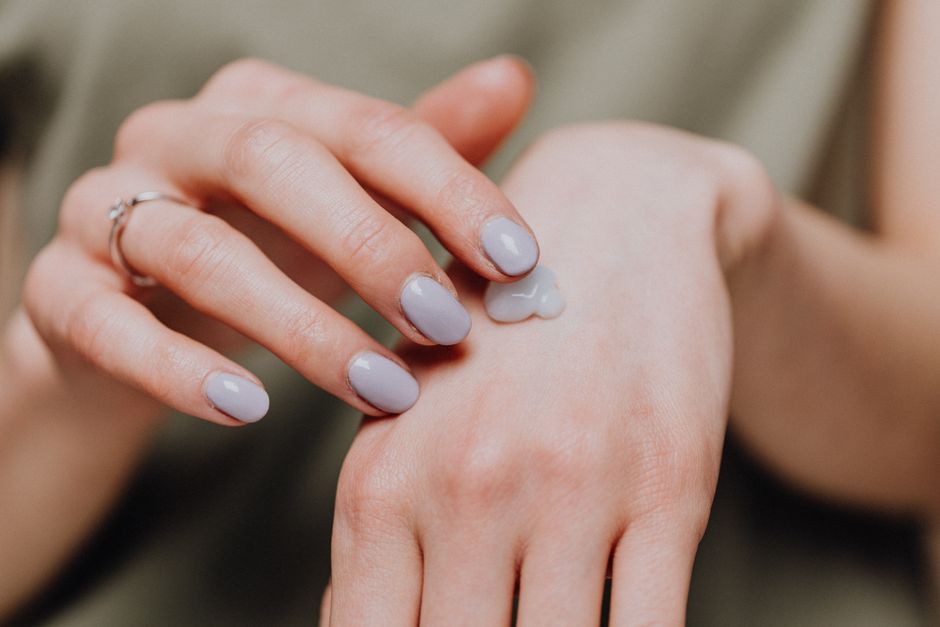
Eye-safe sunscreens have a reputation problem: they feel like you applied butter to your face.
This happens because formulators who remove the lightweight chemical filters often replace them with heavy emollients to keep the formula spreadable. The result is a sunscreen that doesn’t sting but makes you look wet for six hours.
The fix isn’t complicated. You want a formula built around silica or starch-based powders that absorb oil as the product sets. These ingredients are common in Korean “sun gel” textures. They start slightly dewy and dry to a natural-matte finish within 60 seconds. No powdering required.
Alcohol-denat gets a bad rap in skincare, but in sunscreen it serves a purpose. It evaporates instantly, leaving the protective film without the grease. If your skin tolerates it, an alcohol-based sunscreen will always dry down faster than an oil-based one.
The texture test: apply sunscreen, wait three minutes, press a tissue to your cheek. If it sticks, the formula is too emollient for daily wear under makeup. Return it.
Three Sunscreens That Actually Solve Both Problems
No filler picks here. Each of these solves the eye-sting problem and dries to a finish you can live with.
Beauty of Joseon Relief Sun: Rice + Probiotics SPF50+ PA++++
This Korean sunscreen uses Tinosorb S and Uvinul A Plus—zero avobenzone, zero octinoxate. It feels like a lightweight moisturizer, not a sunscreen. The finish is natural, not matte, but it sets within two minutes and doesn’t leave a greasy film. No white cast on medium skin tones.
Price runs around $18 for 50ml. Imported from Korea, so buy from reputable sellers. The one downside: it’s not waterproof. Gym days need something else.
Verdict: Best daily driver for normal-to-dry skin that wants zero sting and zero grease.
Supergoop Unseen Sunscreen SPF 40
This is a clear, silicone-based formula. No avobenzone. The texture is a primer—it fills pores and dries to a velvety matte finish. It’s the only sunscreen my oily-skinned friends will reapply because it doesn’t pile up.
$38 for 50ml. Expensive, but the texture is unique. Caveat: the silicone base can pill under water-based foundations. Test your combo.
Verdict: Best for oily skin and makeup-wearers who want a primer-sunscreen hybrid.
La Roche-Posay Anthelios UVMune 400 Invisible Fluid SPF50+
French pharmacy staple. Uses Mexoryl 400, a filter La Roche-Posay patented that covers ultra-long UVA rays other sunscreens miss. The fluid is thin, spreads fast, and dries to a dry-touch finish that doesn’t move into eyes. No white cast. Water-resistant.
Around $30 for 50ml. The alcohol content is noticeable—if your barrier is compromised, this will sting on application even if it won’t sting your eyes later.
Verdict: Best for high-protection days (beach, long runs) when you need waterproofing and no eye migration.
Application Mistakes That Make Any Sunscreen Sting

Even the best formula fails if you apply it wrong around the eyes.
Mistake one: rubbing sunscreen into your eyelids like it’s eye cream. The product migrates into your lash line within minutes. Instead, apply sunscreen to your orbital bone—the bony rim around your eye socket—and let it naturally spread as you move. Your eyelids get enough protection from the product that migrates upward, without the direct contact that causes stinging.
Mistake two: applying moisturizer or eye cream immediately before sunscreen. The wet layer prevents sunscreen from forming an even film, and the two products mix and slide into your eyes together. Wait 60 seconds between layers.
Mistake three: forgetting your eyebrows and the bridge of your nose. These areas channel sweat and product directly into your eyes. Set them with a tiny amount of translucent powder after sunscreen dries. It locks the film in place.
When to Skip Chemical Filters Entirely
If you have rosacea, perioral dermatitis, or post-procedure skin, even the gentlest chemical filters can trigger a reaction. The problem isn’t the eyes anymore—it’s your entire face.
Mineral-only formulas are your lane. But skip the thick, pasty zinc creams sold as “natural” sunscreens. They’re unwearable daily.
Look for micronized zinc oxide with a particle size around 100-200 nanometers. This size is small enough to appear transparent on skin but still too large to absorb. The Paula’s Choice Calm SPF 30 uses this approach. It’s a tinted mineral lotion that dries to a satin finish. No white cast on Fitzpatrick types I-IV. $33 for 60ml.
For darker skin tones, the EltaMD UV Clear Tinted SPF 46 uses a blend of zinc oxide and octinoxate—but the octinoxate is encapsulated, which reduces migration. It’s the one exception to the “no octinoxate” rule that actually works. $43 for 48ml.
Why American Sunscreens Are Stuck in 1999
The FDA hasn’t approved a new UV filter since 1999. Let that sink in.
Every sunscreen innovation in the last 25 years—Tinosorb, Uvinul, Mexoryl—came from Europe and Asia. American brands are stuck reformulating the same four irritating filters in different ratios. That’s why your Korean sunscreen feels like skincare and your American one feels like punishment.
The FDA classifies sunscreen as a drug, not a cosmetic. New filters require a New Drug Application, which costs millions and takes years. No brand wants to fund that when they can keep selling avobenzone formulations at CVS.
This won’t change in 2026. If you want modern filters, you’re importing. The good news: reliable retailers like YesStyle, Stylevana, and Olive Young ship Korean and European sunscreens directly. The packaging will have foreign text. The protection will be better.
The category is slowly splitting in two: American sunscreens for body and beach days where stinging matters less, and imported face sunscreens for daily wear where texture and eye comfort are non-negotiable. Buy accordingly.